
Farm Raised Feeder Insects: Why What They Eat Matters
When you purchase live insects for reptiles, birds, small animals, or other insect-eating pets, it is easy to focus entirely on the type and size of feeder you are ordering. Yet there is another important factor behind feeder quality: how those insects were raised before they reached you. Farm raised feeder insects depend on appropriate food, hydration, environmental conditions, and careful husbandry throughout their development. What goes into raising the feeder can influence its growth, activity, condition, and ultimately the quality of the product customers receive.
At Sunshine State Worms, feeder quality begins at the farm. Careful attention is given to the food sources used for worms and insects because healthy development does not happen by accident. From mealworms to larger superworms, producing dependable live feeders requires an environment designed around the needs of the insects themselves.
Why the Diet of Farm Raised Feeder Insects Matters
Feeder insects are living organisms, and their own diet supports their development.
Mealworms and superworms require suitable nutrition and husbandry as they grow. The quality of their environment, access to appropriate food, moisture management, temperature, and other conditions can affect their activity and development.
This is particularly important because customers are purchasing the insects as food for another animal.
The concept is straightforward: healthy feeders begin with responsible feeder care.
Feeder-insect nutrition is also one reason reptile keepers frequently hear about gut-loading. Gut-loading refers to providing feeder insects with nutritious food before they are offered to an animal. While short-term gut-loading and long-term farm husbandry are not exactly the same process, both illustrate an important principle: what feeder insects consume deserves attention.
Sunshine State Worms has previously explained how storing and gut-loading mealworms can support feeder quality after customers receive their order.
Farm Feeding Starts Long Before Your Order Ships
A quality live feeder is the result of a process rather than something created at the shipping table.
Before a worm is selected, packed, and shipped, it has already gone through a period of growth and development. During that time, its food source and growing environment help determine the condition in which it eventually reaches the customer.
A well-managed feeder farm pays attention to factors such as:
- Providing appropriate food sources during growth
- Maintaining suitable environmental conditions for the feeder species
- Managing moisture and hydration carefully
- Monitoring growth and feeder activity
- Separating or selecting appropriate sizes when necessary
- Handling live insects carefully during preparation and shipping
These practices help explain why two orders containing the same type of insect can sometimes look very different depending on where and how those insects were raised.
Feeder Quality Is About More Than Protein Numbers
Pet owners often compare feeder insects by looking at protein, fat, moisture, fiber, calcium, and other nutritional characteristics. Those measurements can be useful, but they do not tell the entire story.
Different feeder species naturally have different nutritional profiles. Mealworms and superworms, for example, should not be considered nutritionally identical simply because both are beetle larvae.
The animal being fed also matters.
A feeder appropriate for a mature reptile may be too large for a smaller animal. An insect that works well as part of one species’ feeding plan may need to be used differently for another.
This is why farm raised feeder insects should be evaluated as part of a complete feeding strategy rather than according to one nutritional number.
Sunshine State Worms offers live mealworms in practical feeder sizes for reptiles, birds, small animals, and other applications. Customers looking for larger, more active feeders can instead consider the company’s live superworms.
Why Consistent Feeder Size Is Important
The size of a feeder insect is not merely a cosmetic characteristic.
Pet owners need to choose feeders appropriate for the species, age, and size of the animal being fed. This is especially important with reptiles and other animals that consume live prey.
A feeder that is unnecessarily large may be inappropriate for a small animal, while an undersized feeder may not suit the needs of a larger animal or feeding situation.
Consistent farm production helps customers make more predictable choices.
Sunshine State Worms specifically offers multiple size options across its live-feeder selection. That makes it easier for customers to select feeders according to the animal or application rather than receiving a random mixture of substantially different sizes.
Growth and size are also connected to husbandry. Food availability, environmental conditions, developmental stage, and species all play a role in the feeder that ultimately reaches the customer.
Healthy Activity Is Another Sign of Live Feeder Quality
When customers order live feeders, they are purchasing a perishable living product.
Activity can therefore be an important practical indicator when an order arrives. Healthy-looking, appropriately active worms are easier for customers to evaluate and use than feeders that have been poorly maintained or mishandled.
For reptile owners, movement serves another purpose.
Many insect-eating reptiles naturally respond to moving prey. Live feeders can encourage hunting and foraging behaviors as an animal notices, tracks, and captures its food.
That does not mean more movement automatically equals greater nutritional value. Instead, activity is one of several practical characteristics customers can observe when evaluating live feeder condition.
Quality should be considered more broadly: appropriate size, healthy appearance, live arrival, proper handling, suitable storage, and responsible farm husbandry all contribute to the customer experience.
Farm Raised Feeders vs. Insects Collected Outdoors
There is an important distinction between purpose-raised feeder insects and insects randomly collected outdoors.
Wild insects can have unknown exposure histories. They may have encountered pesticides, herbicides, contaminated environments, parasites, or plants and substances that are inappropriate for the animal being fed.
Farm production provides greater control over the environment in which feeders are raised.
That controlled approach allows producers to manage food, housing, handling, and other husbandry factors rather than relying on insects with unknown backgrounds.
For pet owners, knowing the source of live food is therefore an important part of responsible feeding.
Sunshine State Worms is a dedicated feeder farm in Brooksville, Florida, with more than 20 years of experience in live-insect breeding and worm production. Customers can learn more about the company’s farming background on the Sunshine State Worms About Us page.
Farm Husbandry and Gut-Loading Serve Different Purposes
It is useful to distinguish routine farm feeding from gut-loading.
Maintenance feeding supports an insect throughout normal growth and development. Gut-loading is a more targeted practice in which feeder insects are provided an appropriate nutrient-rich diet before being offered to a reptile or other animal.
Both practices involve feeder nutrition, but they occur for different reasons and at different points in the process.
A feeder farm’s responsibility begins with raising healthy stock under suitable conditions. Once feeders arrive at their destination, the customer becomes responsible for proper storage, continued feeding where appropriate, and any gut-loading or supplementation required for the animal receiving them.
This shared approach helps preserve feeder quality from the farm to feeding time.
Choosing Feeders Based on the Animal You Are Feeding
There is no single live feeder that is ideal for every animal.
Reptiles vary considerably by species, age, size, metabolism, and natural diet. Birds, amphibians, fish, and other animals have their own feeding requirements.
For that reason, responsible owners should consider:
- The animal’s species and natural feeding behavior
- The appropriate prey size for the individual animal
- The nutritional profile of each feeder species
- How frequently a particular feeder should be offered
- Whether gut-loading or supplementation is appropriate
- The value of dietary variety for the animal being fed
Species-specific feeding guidance from an exotic-animal veterinarian or other qualified source should take priority over generalized advice.
The goal of a feeder farm is to provide customers with healthy, properly raised live feeders. The pet owner’s role is to choose and use those feeders appropriately.
Why Freshness Matters After Feeders Leave the Farm
Raising quality insects is only the beginning. Live feeders must also be handled, packaged, shipped, received, and stored appropriately.
Temperature is particularly important because live insects can be affected by environmental extremes during transit.
Once an order arrives, customers should inspect the feeders and follow appropriate storage recommendations. Mealworms and superworms have different storage needs, and proper care can help maintain their condition for future feeding.
Customers who order regularly should also consider how many feeders they can realistically use and maintain. Buying the right quantity can help avoid unnecessary waste while keeping a dependable supply available.
Freshness, storage, and proper handling work together with farm husbandry to maintain the quality that began during production.
Quality Farm Raised Feeder Insects From Sunshine State Worms
Sunshine State Worms understands that producing quality live feeders begins well before an order is placed. The company operates as a feeder farm with more than 20 years of experience in breeding live insects and producing worms for reptile owners, bird enthusiasts, anglers, and other customers throughout the United States.
A central part of the company’s approach is paying attention to the food sources used to raise its worms and insects. Appropriate farm feeding, careful husbandry, size selection, live-insect handling, and shipping practices all contribute to the quality of the finished feeder product.
Sunshine State Worms produces mealworms and superworms in different sizes, allowing customers to choose feeders according to their particular animals and applications. The company also offers crickets and feeder-care supplies for customers who need additional live-feeding options.
When choosing farm raised feeder insects, source matters. Knowing that feeders come from an experienced operation dedicated specifically to live-insect production provides customers with greater confidence in how those feeders were raised and handled.
From the food given to developing worms to the care taken when preparing live orders, Sunshine State Worms focuses on producing dependable feeders from the farm forward. For reptile owners and other customers who care about what goes into the insects they feed, that attention to quality can make the source of their feeders an important part of the buying decision.
Frequently Asked Questions
Why does the food given to feeder insects matter?
The food and husbandry provided to feeder insects support their growth, development, and condition. Feeder diet can also influence aspects of nutritional composition. This is one reason both responsible farm feeding and appropriate pre-feeding gut-loading receive attention among reptile keepers.
What does it mean when feeder insects are gut-loaded?
Gut-loading is the practice of feeding live insects a nutrient-focused diet for a period before they are offered to a reptile or another insect-eating animal. It is different from routine maintenance feeding, which supports the insect throughout its normal growth and development. Owners should follow species-appropriate guidance when deciding how to gut-load feeders.
Are farm raised feeder insects better than wild-caught insects?
Purpose-raised feeders offer the advantage of a more controlled production environment and a known source. Wild-caught insects may have unknown exposure to pesticides, contaminants, parasites, or unsuitable plants. For captive animals, reputable farm-raised or captive-bred feeders generally provide a more controlled option.
How do I choose the right size feeder insect for my reptile?
Appropriate feeder size depends on the reptile’s species, age, individual size, and feeding requirements. Smaller or juvenile animals generally require appropriately smaller prey than mature animals. Because recommendations differ by species, owners should follow reliable species-specific husbandry guidance or advice from an exotic-animal veterinarian when selecting feeder size.
“`



Recent reviews
-
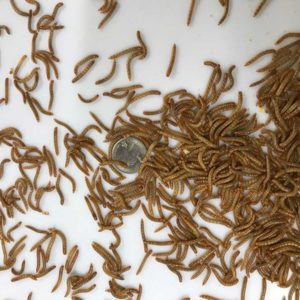 1/2-3/4" Medium Mealworms
by Rebecca Powers
-
1/2-3/4" Medium Mealworms
by GLENN TAYLOR
-
1/2-3/4" Medium Mealworms
by Liliya & Valeriy